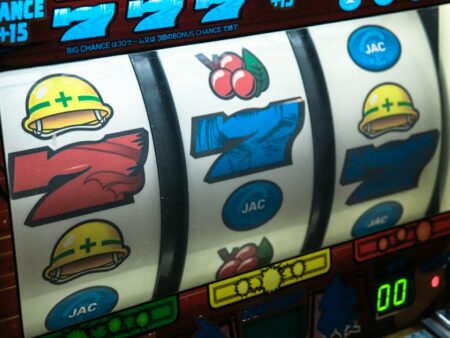

Walk through almost any casino floor and you’ll hear the same theory repeated like gospel: some slot machines are “hot” and about to pay, others have gone “cold” and are drying up. Online, the belief takes a slightly different shape — players swap tips about which online slot “hit big last night” as if a server somewhere remembers their session. Neither version holds up once you look at how the software behind every spin actually works.
The hot and cold slots myth is one of the oldest ideas in gambling folklore, and it survives for a simple reason: human brains are built to find patterns, even inside pure randomness. This guide breaks down what a random number generator (RNG) actually does on every spin, why streaks feel meaningful even when they aren’t, and what real data on player behavior and regulatory testing shows about machines that supposedly run hot or cold.
What does the “hot and cold slots” myth actually claim?
The myth comes in two related versions. The land-based version says a physical machine goes through payout cycles — generous for a while, then stingy — often tied to how long it’s been since the last big win. The online version assumes a specific slot title or session has a mood: if a game “hasn’t paid” in a while, it’s supposedly due for a win soon, or the opposite — it “already paid out,” so it’s about to run dry.
Both versions share the same core assumption: that a machine’s past results affect its future results. That assumption is the part that doesn’t survive contact with how RNG software is actually built.
How does a slot’s RNG actually decide each spin?
A certified slot RNG generates a continuous stream of random values, independent of anything that happened on the machine before. The exact number it lands on at the moment you press spin determines the outcome of that spin — not the previous ten spins, not the time of day, not how much the machine has paid out that week.
Regulators test this property directly before a game ever reaches players. Under the UK Gambling Commission’s remote gambling and software technical standards, random number generation must be “acceptably random,” meaning operators must demonstrate — through statistical testing — that outputs are uniformly distributed and that the sequence cannot be predicted or manipulated. A game that failed this testing would never be certified for real-money play, no matter how convincing a “hot streak” pattern looked to a human observer.
In practice, this gives every slot spin three properties that rule out hot and cold states:
- Independence — each spin’s outcome has no mathematical link to the one before it.
- No memory — the RNG doesn’t track how much a machine has paid out historically.
- Fixed long-run odds — the game’s RTP is a mathematical property of its paytable and reel weightings, not something that drifts up or down over time.
Why do slots feel hot or cold if every spin is random?
Because randomness doesn’t look evenly spread out — it clusters. Flip a coin 20 times and you’ll very likely see a run of four or five heads in a row somewhere in that sequence, purely by chance. The same clustering happens on slots: a high-volatility title can go dozens of spins without a meaningful win, then land two bonus rounds close together. Nothing about the machine changed between those two moments. What changed is which part of a long, random sequence you happened to be watching.
Selective memory does the rest of the work. Players remember the machine that “went cold” for twenty minutes far more vividly than the fifty unremarkable spins around it, and that lopsided memory quietly rewrites the machine’s reputation in their mind. This is a close cousin of the effect covered in our breakdown of why almost winning keeps players spinning — both rely on the brain overweighting emotionally charged moments and underweighting the quiet, boring majority of spins.
What does real player data show about betting after losses and wins?
If the hot and cold myth were true, you’d expect players to adjust their bets rationally around a machine’s supposed “cycles.” Instead, researchers studying actual slot play found a different pattern — one driven by emotion, not machine state. A 2024 study published in Scientific Reports analyzing real online slot sessions found that players increased their bet size after an immediate loss, but every standard-deviation increase in cumulative losses across a session reduced the size of their next bet by 6.77% — a pattern driven by shrinking bankroll and loss-chasing psychology, not by any genuine shift in the machine’s underlying odds.
That distinction matters: the data shows player behavior changing from session to session. It does not show the machine’s payout mechanics changing at all — because, mathematically, they can’t.
Is there anything real behind the “due for a win” feeling?
Volatility is the one real mechanic that can make this feeling partly understandable, even though the reasoning behind it is still wrong. A high-volatility slot pays out less often but with bigger spikes, which naturally produces longer dry stretches between wins than a low-volatility title. That dry stretch can feel like a machine “owing” you a win. It isn’t — the drought and the eventual spike are both already baked into that volatility profile from the start, not something that accumulates as a debt to be repaid. Our guide to RTP vs. volatility and what actually matters for your bankroll goes deeper into how volatility shapes session length, independent of any myth about machine mood.
Frequently asked questions about hot and cold slots
Can a slot machine really be “due” for a jackpot?
No. Because every spin is generated independently, a machine that hasn’t paid a jackpot in ten thousand spins has exactly the same odds on the next spin as one that just paid out. There is no accumulating debt the machine owes a player.
Do casinos control which machines pay out at certain times?
No — certified RNGs are tested by independent labs before release specifically so that neither the casino nor the player can influence or predict individual outcomes. Operators cannot flip a machine from “loose” to “tight” on a schedule.
Why do some online slots feel like they pay more at night or on weekends?
This is selective memory and small sample size, not a real pattern. Play enough sessions at any time of day and the long-run results converge on the same RTP; a handful of sessions remembered because they felt lucky isn’t enough data to prove a time-based effect.
Does changing my bet size make a slot run “hotter”?
No. RTP and volatility are fixed properties of a game’s math model regardless of stake size. A bigger bet changes how much you can win or lose per spin — it doesn’t change the underlying probability of any outcome.
Understanding this doesn’t make slots less fun to play — if anything, it frees you from chasing imaginary cycles and lets you focus on the two numbers that actually matter for any session: a game’s RTP and its volatility rating.

Daniel Mbeki is an experienced gambling writer and betting analyst with a strong focus on African online casinos and sports betting platforms. He covers betting tips, bookmaker reviews, casino bonuses, and responsible gambling trends across Africa. With years of industry knowledge, Daniel helps players make smarter betting decisions and stay updated with the latest gaming opportunities.