
European Roulette vs American Roulette Odds
European roulette vs American roulette odds come down to one small addition on the wheel that makes a real difference to your bankroll: a second zero pocket. That single extra number changes the house edge, your win probability on every bet type, and — depending on how you play — which version actually suits your strategy better.
This guide breaks down the math in plain terms: the exact house edge on each wheel, how that edge translates into real win probabilities bet by bet, a full comparison table of odds and payouts, and which variant makes more sense depending on how you play.
What’s Actually Different Between the Two Wheels?
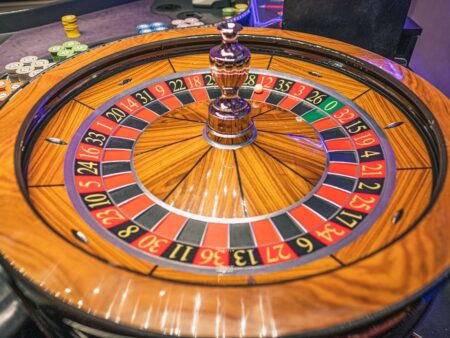
A European roulette wheel has 37 pockets: the numbers 1 through 36, plus a single zero (0). An American wheel has 38 pockets — the same 1-36 numbers, plus both a single zero (0) and a double zero (00).
That one extra pocket is the entire difference between the two games. The betting layout, the chip values, the wheel spin — all of it looks and feels identical at the table. But every payout on the American wheel is calculated against 38 possible outcomes instead of 37, while the payouts themselves stay exactly the same. That mismatch between “more ways to lose” and “same reward for winning” is where the house edge comes from.

House Edge Compared: 2.70% vs 5.26%
The house edge is the average percentage of every wager the casino expects to keep over the long run. On a European wheel, it’s 2.70% (1 divided by 37). On an American wheel, it’s 5.26% (2 divided by 38) — almost exactly double.
Practically speaking: for every $100 you wager over a long session, European roulette costs you around $2.70 on average, while American roulette costs around $5.26. The gap doesn’t come from worse payouts — a straight-up single number pays 35 to 1 on both wheels. It comes purely from the extra 00 pocket lowering your actual odds of winning without the payout adjusting to match.
| Metric | European Roulette (37 pockets) | American Roulette (38 pockets) |
|---|---|---|
| Total pockets | 37 (1-36 + single 0) | 38 (1-36 + 0 + 00) |
| House edge | 2.70% | 5.26% |
| Straight-up single number odds | 1 in 37 (2.70%) | 1 in 38 (2.63%) |
| Even-money bet odds (red/black, odd/even) | 18 in 37 (48.65%) | 18 in 38 (47.37%) |
| Dozen / column bet odds (2:1 payout) | 12 in 37 (32.43%) | 12 in 38 (31.58%) |
| Corner bet odds (4 numbers, 8:1 payout) | 4 in 37 (10.81%) | 4 in 38 (10.53%) |
| Straight-up payout | 35 to 1 | 35 to 1 |
According to Wizard of Odds, this ratio between true odds and payout stays consistent across almost every bet on the layout — inside or outside — which is why the 2.70% vs 5.26% figures apply to the wheel as a whole, not just to one type of bet.
How That Edge Changes Your Real Win Probability
The house edge is a long-run average, but it’s worth translating into what actually happens bet by bet, because that’s what a player sitting at the table experiences directly.
- Straight-up (single number): 2.70% chance to win on European, 2.63% on American — a small gap per spin, but it compounds fast across a session of dozens of spins.
- Even-money bets (red/black, odd/even, high/low): 48.65% on European vs 47.37% on American. This 1.3-point gap is the one players feel most, since even-money bets are the most common way people play roulette casually.
- Dozens and columns: 32.43% on European vs 31.58% on American.
- Corner and street bets: the gap narrows proportionally but never disappears — the extra 00 pocket dilutes every single bet type on the American wheel by the same underlying ratio.
None of these differences make American roulette unplayable. But across hundreds of spins in a session, that consistent gap adds up to a measurably shorter bankroll life on the American wheel, all else being equal.
The Bet to Avoid on an American Wheel
There’s one bet worth flagging specifically: the five-number bet (0, 00, 1, 2, 3), available only on American wheels. It carries a house edge of roughly 7.89% — noticeably higher than every other bet on the table, including the standard straight-up bets. It exists only because of the double zero, and it’s generally considered the single worst-value bet in mainstream roulette. If you play American roulette, this is the one combination worth skipping entirely regardless of your staking strategy.
Betting Options: Inside and Outside Bets Side by Side
Both wheels use the same betting layout structure — inside bets on specific numbers or small groups, outside bets on broader categories. What changes is the underlying probability behind each one, since the total pocket count is different.
| Bet type | Numbers covered | Payout | European probability | American probability |
|---|---|---|---|---|
| Straight-up | 1 | 35:1 | 2.70% | 2.63% |
| Split | 2 | 17:1 | 5.41% | 5.26% |
| Street | 3 | 11:1 | 8.11% | 7.89% |
| Corner | 4 | 8:1 | 10.81% | 10.53% |
| Six line | 6 | 5:1 | 16.22% | 15.79% |
| Dozen / Column | 12 | 2:1 | 32.43% | 31.58% |
| Even-money (red/black, odd/even, 1-18/19-36) | 18 | 1:1 | 48.65% | 47.37% |
One detail worth knowing: on some European tables, a rule called La Partage returns half of your even-money bet if the ball lands on zero, and a related rule called En Prison holds your bet for another spin instead. Where either rule applies, the effective house edge on even-money bets drops to roughly 1.35% — half the standard European figure. It’s not available everywhere, so it’s worth checking the table rules before assuming it applies.

Which Variant Fits Your Strategy?
The “right” choice depends less on personal preference and more on how you actually bet.
- If you play mostly even-money bets (red/black, odd/even): European roulette is the clearer choice. The 1.3-point probability gap on this bet type is the most noticeable of any category, and it’s the bet type most casual players lean on.
- If you play for short, high-variance sessions on single numbers: the gap between wheels matters less in absolute terms per spin, since both carry low odds regardless of wheel type — though European still edges out American marginally.
- If bankroll longevity matters more than any single win: European roulette, or a French roulette table with La Partage/En Prison if available, stretches your session length further for the same stake size.
- If only American tables are available where you play: avoid the five-number bet specifically, keep bet sizes disciplined, and treat sessions as shorter by design rather than trying to force the same session length you’d get on a European wheel.
Bankroll discipline matters more on the higher-edge wheel, in the same way that understanding risk profile matters when picking a slot — the same logic behind how volatility affects slot outcomes applies here: a higher-edge, higher-variance game demands a stricter staking plan, not a bigger one. And if roulette sessions start running longer or bigger than planned regardless of which wheel you choose, it’s worth knowing that self-exclusion and responsible gambling tools exist specifically to put hard limits back in your hands.
Frequently Asked Questions
Is European roulette always better than American roulette?
Mathematically, yes — the house edge is lower (2.70% vs 5.26%) on every standard bet type. The only near-exception is a European or French table with no La Partage/En Prison rule and unusually poor table conditions, which is rare enough not to change the general recommendation.
Does the payout change between European and American roulette?
No. A straight-up single-number bet pays 35 to 1 on both wheels, and other bets pay the same odds too. The house edge difference comes entirely from the extra 00 pocket lowering your actual win probability, not from smaller payouts.
What’s the single worst bet in roulette?
The five-number bet (0, 00, 1, 2, 3), available only on American wheels, at roughly 7.89% house edge. It’s the one bet worth avoiding outright regardless of strategy.
Can you lower the house edge further on a European table?
Yes, where available. La Partage and En Prison rules on even-money bets cut the effective edge to around 1.35% on tables that offer them — worth checking before you sit down, since not every European or French table includes these rules by default.
The Bottom Line
The gap between European roulette vs American roulette odds isn’t a marketing distinction — it’s a fixed mathematical fact rooted in one extra pocket on the wheel. European roulette’s 2.70% house edge against American roulette’s 5.26% means every bet type, from straight-up numbers to even-money outside bets, gives you a measurably better long-run probability on the European wheel. If both are available, the choice is straightforward. If only American tables are on offer, the game is still playable — it just rewards tighter bankroll discipline and, above all, staying away from the five-number bet.
Related Articles
- Tous les articles Roulette
- The Psychology of Roulette: Understanding the Mental Hooks That Keep Players Spinning
- The Complete American Roulette Online Strategy Guide for Serious Players
- The Complete Beginner’s Guide to Online Roulette: Rules, Bets, and Strategies
Recommended Bookmakers

Daniel Mbeki is an experienced gambling writer and betting analyst with a strong focus on African online casinos and sports betting platforms. He covers betting tips, bookmaker reviews, casino bonuses, and responsible gambling trends across Africa. With years of industry knowledge, Daniel helps players make smarter betting decisions and stay updated with the latest gaming opportunities.