
Every casino game you play online resolves its outcome through one of two fundamentally different systems: a certified algorithm running on a server, or a real dealer working a physical table that’s captured on camera. Players often assume these two systems are interchangeable — they’re not. Understanding how each one actually produces a result is the difference between trusting a game because it “feels fair” and knowing exactly what makes it verifiable.
How a Certified Random Number Generator Actually Produces a Result
A Random Number Generator (RNG) used in slots and automated table games isn’t rolling dice or shuffling anything physical. It’s a piece of software — a Pseudo-Random Number Generator (PRNG) — that runs a mathematical algorithm seeded by a constantly changing value, often drawn from system-level entropy such as microsecond timing. That seed feeds into an algorithm that outputs a long, unpredictable sequence of numbers, and each number is mapped to a specific game outcome: a reel position, a card, a multiplier.
Two details matter here that players frequently misunderstand:
- Every spin is independent. The RNG doesn’t “remember” previous results, so there’s no mechanical concept of a slot being due for a win after a losing streak.
- The Return to Player (RTP) figure is a mathematical property of the algorithm, not a live tracker. It’s calculated over millions of theoretical spins, not adjusted in real time based on how a specific session is going.
Who Actually Checks That an RNG Is Random? (Certification Labs)
An RNG isn’t trustworthy just because a provider says so. Independent testing labs audit the source code and the raw output before a game ever reaches a live casino, and they keep auditing it afterward. eCOGRA is one of the best-known labs, running RNG certification approved by several regulatory jurisdictions. GLI (Gaming Laboratories International) takes a similarly rigorous route: source code review, determination of the RNG’s period and range, inspection of the seeding process, and batteries of statistical randomness tests (including the well-known DIEHARD suite) applied to millions of generated outcomes.
This isn’t a one-time stamp of approval. These labs — along with iTech Labs and others — perform ongoing audits of live casino software, sampling large volumes of real game results to confirm that outcomes stay statistically random and that the published RTP actually matches what the game delivers over time.
Where RNG Runs the Show: Slots and Automated Table Games
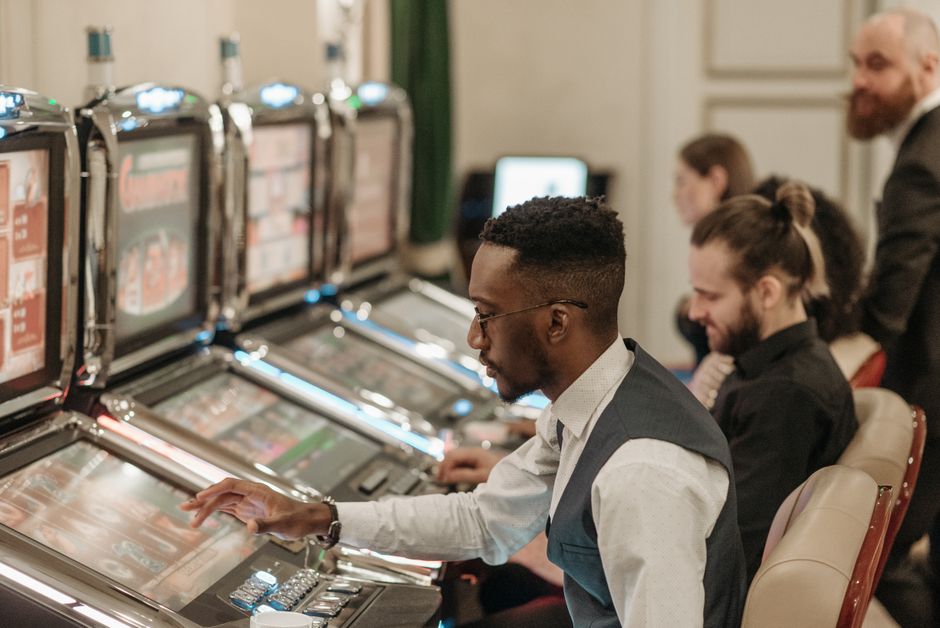
RNG is the engine behind virtually every slot and every automated (non-live) table game. Each title has its own certified RTP and volatility profile, and that data is exactly what separates a genuinely informative slot review from marketing copy. Our breakdowns of Gates of Olympus, Sweet Bonanza, and Fortune Tiger go through each game’s official RTP figures and volatility pattern in detail — worth reading alongside this guide if you want to see the RNG’s output translated into real bankroll math for a specific title.
Inside a Live Dealer Studio: From Physical Table to Your Screen
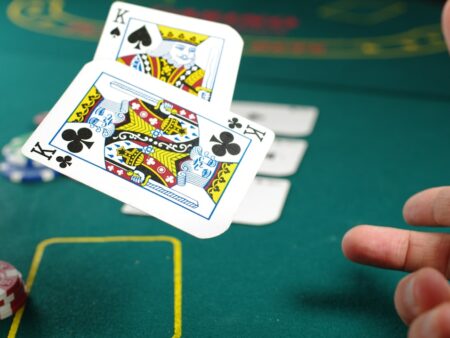
Live dealer games work on an entirely different principle. There’s no algorithm generating the outcome — a real dealer spins a real roulette wheel or shuffles a real deck of cards, in a purpose-built studio with professional lighting, felt tables, and several fixed high-definition cameras covering different angles. The randomness here comes from the physical world, the same as it would at a land-based table, not from a computed sequence.
What makes the format work online is the bridge between that physical action and the digital interface a player sees: the video feed has to be turned into structured data the platform can process, instantly, every single time a card lands or the wheel stops.
How Optical Character Recognition (OCR) Turns a Real Card Into Digital Data
This is where Optical Character Recognition (OCR) comes in. Cameras positioned directly above the table capture each card or the roulette wheel’s landing position, and OCR software scans that image, identifying the card’s suit and value or the number the ball has landed on, converting it into digital data in real time.
OCR doesn’t operate alone — it works alongside a Game Control Unit (GCU), a small device attached to every live table that encodes what’s happening on the table and syncs it with the online platform. The sequence, in order, looks like this:
- The dealer performs the physical action — dealing a card or spinning the wheel.
- Multiple fixed cameras capture it from several angles simultaneously.
- OCR software reads the result and converts it into structured digital data.
- The Game Control Unit encodes that data and pushes it to the online platform.
- The player’s balance and interface update instantly, with bets settled automatically.

RNG vs Live Dealer: Comparing Fairness and Verifiability
Both systems can be fair, but “fair” means something different in each case, and so does how you’d go about checking it:
- Source of randomness: RNG relies on a mathematical algorithm and a changing seed value. Live dealer relies on a physical event — a real shuffle, a real spin — captured on camera.
- How it’s verified: RNG fairness is verified by independent labs auditing source code and statistical output before and after launch. Live dealer fairness is verified by watching the physical action happen in real time on camera — there’s no algorithm to audit because there isn’t one generating the result.
- Consistency of the odds: An RNG game’s RTP is a fixed mathematical property that holds over a large enough sample. A live dealer game’s odds follow the same mathematics as the physical game it mirrors (a European roulette wheel behaves the same whether it’s live or RNG-simulated), but there’s no “theoretical RTP” audit report attached to a specific dealer or table — the wheel itself is what’s certified.
- What can go wrong technically: An RNG game’s risk is a flawed or poorly-seeded algorithm, which is exactly what certification labs test for. A live dealer game’s risk is a technical failure in the OCR/GCU pipeline (a misread card, a dropped connection), which is why studios run redundant cameras and manual dealer confirmation as a backup.
Can a Player Actually Verify Any of This Themselves?
Not directly, in most cases — and that’s worth being honest about rather than glossing over. RNG certification reports are typically published by the lab or referenced by the casino/provider, not something a player audits personally spin by spin. Live dealer fairness is, in a sense, more immediately visible: you’re watching the physical action happen on camera as it happens, which is precisely why many players find it more reassuring even though the underlying mathematics of a live European roulette wheel and an RNG-simulated one are identical.
Some game formats (particularly certain crash-style multiplier games) use a separate mechanic called “provably fair,” where a cryptographic hash lets a player verify after the fact that a result wasn’t altered once the round started. That’s a distinct mechanism from RNG certification or OCR capture — worth knowing it exists as a third category, even though it doesn’t apply to standard RNG slots or live dealer tables.
Frequently Asked Questions
Is a live dealer game fairer than an RNG slot?
Not inherently — they’re fair through different mechanisms. An RNG slot’s fairness rests on independent lab certification of the algorithm; a live dealer game’s fairness rests on a real physical action captured on camera. Neither is mathematically “more fair” than the other when both are properly certified and operated.
Can an RNG be hacked or rigged to make players lose more?
A certified RNG’s source code and output are reviewed by independent labs specifically to rule this out, including statistical tests designed to catch any pattern or bias. That’s a different question from whether an unlicensed, uncertified operator might use unaudited software — which is exactly why certification from a recognized lab matters when evaluating a game.
Why do live dealer games feel slower than RNG-based games?
Because a live dealer game is bound by the real-world pace of an actual human dealing cards or spinning a wheel, plus the time needed for cameras, OCR processing, and the Game Control Unit to convert that action into digital data. An RNG game has no physical action to wait for, so it resolves as fast as the algorithm computes.

Daniel Mbeki is an experienced gambling writer and betting analyst with a strong focus on African online casinos and sports betting platforms. He covers betting tips, bookmaker reviews, casino bonuses, and responsible gambling trends across Africa. With years of industry knowledge, Daniel helps players make smarter betting decisions and stay updated with the latest gaming opportunities.