
Near miss effect slots psychology explained: that flutter you feel when two matching symbols line up and the third stops just one position short isn’t an accident of bad luck — it’s a documented psychological trigger that behavioral researchers have studied for decades. Understanding why a loss that looks “almost” like a win keeps players spinning is the fastest way to stop it from working on you.
What Actually Counts as a “Near Miss” on a Slot Reel?
A near miss is a losing outcome that looks close to a jackpot — two matching symbols on a payline with the third landing just above or below it, for example. On modern video slots, reel stops are generated by a random number generator, and the near-miss appearance is a visual byproduct of how symbols are weighted and displayed, not a sign the machine is “warming up.”
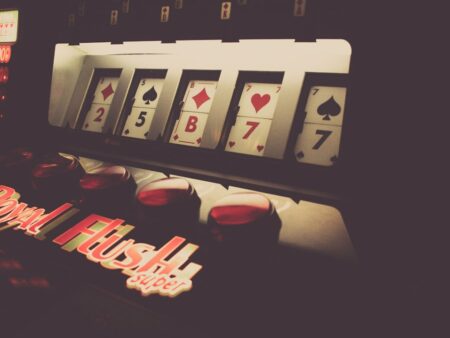
Picture three reels landing on cherry, cherry, lemon, with the lemon stopping just one row below the cherry needed to complete the line. Nothing about that outcome is mathematically different from three completely unrelated symbols landing with no visual relationship at all. Only one of those two losses, though, looks like you were close.
The fact worth repeating: a near miss carries exactly the same probability information as a full miss. The spin before it told you nothing about the spin after it. Yet players consistently react to near misses as if they were meaningfully different from an ordinary loss — and that reaction is where the psychology gets interesting.
Near Miss Effect Slots Psychology Explained: What the Research Shows
Gambling researchers have tested the near-miss effect using everything from behavioral persistence tasks to brain scans, and the pattern holds up across methods.
- Brain electrical activity treats near misses as “almost a win.” In an EEG study measuring feedback-related brain activity, the signal generated by a near miss fell between the signal for a full loss and the signal for a win — the brain measurably processed it as a distinct, intermediate category rather than simply registering “lost.”
- Problem gamblers’ brains respond to near misses like wins. In a brain-imaging study of pathological gamblers, near-miss outcomes activated overlapping reward-related brain regions to actual wins in gamblers with gambling problems, while non-problem gamblers’ brains kept the two outcomes clearly separate.
- Near misses change real betting behavior, not just mood. A 2024 replication study published in Psychology of Addictive Behaviors found that near-misses were rated more positively than full losses, increased players’ motivation to keep playing, and led participants to start their next spin faster and wager more money than after an ordinary loss.
None of these studies found that near misses predict future wins, because they can’t. What they found is that the human brain treats “close” as emotionally and behaviorally meaningful, even when the math says otherwise.
Why Your Brain Rewards “Almost” Instead of Registering a Loss
The explanation researchers point to most often is a misapplied learning instinct. In most real-world skill tasks — shooting a basketball, parking a car — getting closer to the target really does mean you’re improving, and your brain is wired to treat “almost” as useful feedback worth acting on. Slot outcomes borrow that same visual language of “almost” without any of the underlying skill mechanism, and the brain responds as if the feedback were still informative.
That mismatch is also why near misses tend to raise physiological arousal before the next spin. A skin-conductance study of near-miss outcomes recorded sharper spikes in skin conductance, a standard physiological arousal measure, right after near misses compared with ordinary losses — priming the player to continue rather than pause and reassess.
Does Slot Volatility Make Near Misses Feel More Frequent?
Volatility affects win frequency and session rhythm, which shapes how often a near miss shows up relative to an actual win. On a high-volatility slot, long stretches between real wins mean near misses make up a larger share of the “exciting” outcomes a player experiences in a session — exactly the environment where the effect has the most room to influence continued play. Lower-volatility titles, with more frequent small wins, dilute how much weight any single near miss carries in a session.

How to Recognize the Near Miss Effect Before It Costs You
You can’t switch off the brain response, but you can build habits that stop it from steering your bankroll.
- Name it when it happens. The moment you feel the urge to “go again right now” after a near-miss spin, remind yourself that outcome carried zero information about the next one.
- Set your stop-loss before the session starts, not after a string of near misses has already raised your arousal and lowered your patience.
- Watch your bet size after a near miss specifically. If you notice yourself increasing your stake right after a close call rather than after a genuine win, that’s the effect working on you in real time.
- Take a break after a cluster of near misses, not only after a losing streak in money terms — the emotional spike is the real trigger, not the balance on screen.
- Remember the RNG resets every spin. No sequence of near misses makes a win “due.”
The same mental hooks show up outside slots too — our breakdown of the psychology behind roulette’s mental hooks covers a related set of cognitive traps built around anticipation and perceived patterns, worth reading if you play across multiple game types.
The Bottom Line on Near Misses
A near miss is a loss wearing a win’s outfit. The research is consistent on that point even where studies disagree on exactly how strong the effect is or who it affects most: near misses get processed by the brain as meaningfully different from an ordinary loss, and that processing nudges players toward spinning again. Knowing the mechanism exists — and naming it the moment it fires — is a far more reliable defense than any strategy built on reading patterns into outcomes that were decided the instant you pressed spin.

Daniel Mbeki is an experienced gambling writer and betting analyst with a strong focus on African online casinos and sports betting platforms. He covers betting tips, bookmaker reviews, casino bonuses, and responsible gambling trends across Africa. With years of industry knowledge, Daniel helps players make smarter betting decisions and stay updated with the latest gaming opportunities.